Learning Hub
 Sign up to our newsletter

10 February 2026
Please tell us about your current role and organisation
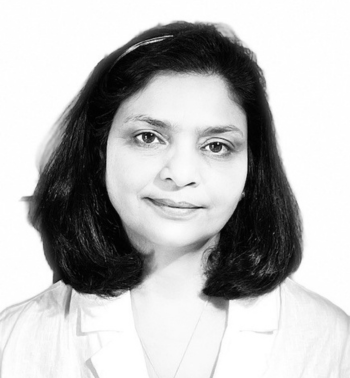
I am a Consultant in Chemical Pathology and Metabolic Medicine, and Clinical Lead for Adult Inherited Metabolic Diseases at Guy’s and St Thomas’ NHS Foundation Trust, and Honorary Senior Clinical Lecturer at King's College London.
Please briefly tell us about your background and career up to this point
I am Clinical Lead for one of five nationally commissioned adult inherited metabolic diseases (IMD) services in England since 2017. I have specialist expertise in adult IMD, with international and national recognition for Adult Refsum Disease and for orphan lipid disorders respectively, with a translational research focus in rare disease.
My diagnostic evaluation experience was gained through an NIHR-funded Doctoral Fellowship and service on the NICE Diagnostics Accuracy Committee (2022–2025). I am Principal Investigator (PI) for commercial clinical trials and supervise research into nutrition in IMD.
What attracted you to rare disease?
What attracted me to rare disease was that it is a new and rapidly emerging specialty that uniquely combines clinical and laboratory expertise. It allows the development of long-term relationships with patients and families, alongside access to exciting new therapies capable of transforming lives.
The field is characterised by a small, highly collaborative professional network and huge unmet clinical and research needs, offering exceptional opportunities for impactful, patient-centred translational research.
What do you think people in the Rare Disease Network would find most surprising or interesting about you?
Colleagues are often surprised by the breadth of inherited metabolic diseases — now approaching 1,500 conditions — and how insights from IMD pathophysiology and treatment inform our understanding of many common disorders. My work spans biochemistry, genetics, nutrition, and clinical medicine, collaborating closely with specialist metabolic dietitians and laboratory scientists.
I also represent adults on the British Inherited Metabolic Disease Group guidelines committee and serve on the Medical and Scientific Advisory Board for Global DARE, the international Adult Refsum disease patient advocacy group.
Please tell us about your current projects or activities related to rare disease?
My current projects focus on Adult Refsum Disease (ARD) and Familial Chylomicronemia Syndrome (FCS).
For ARD, I am first author on the international consensus guidelines and lead funded collaborative research on its natural history with Harvard University and the Global DARE patient advocacy group.
I am also part of national collaborative observational studies on outcomes in FCS and other IMDs, and serve as clinical and academic supervisor for an NIHR doctoral project on protein metabolism in Phenylketonuria.
What are your plans for future years and how the Rare Disease Network might help you to achieve them?
When I joined in 2013, the service cared for just 200 patients with a team of three. Patient numbers now exceed 1,000, and the team has grown to 15, with nationally and internationally recognised expertise in multiple conditions built over the past few years.
Having worked single-handedly until the permanent second consultant appointment in early 2025, I now plan to consolidate expertise, expand translational research, and improve outcomes.
The Rare Disease Network can provide support through funding guidance, shared resources, and training opportunities.
Find out more about the work of the KHP Rare Disease Network.