Learning Hub
 Sign up to our newsletter

24 February 2026
A spreading depolarisation (SD) is a wave of short circuiting of the cellular population of cerebral grey matter, commonly and most readily detected in the cerebral cortex.
When a brain injury occurs, one adverse effect is that nerve cells in the brain (which act like batteries by storing electrical and chemical energy) malfunction and effectively short-circuit, thus discharging their normal membrane potential - depolarising.
In an affected local area of cerebral cortex, this depolarisation causes all the neighbouring cells to short-circuit as well. This subsequent leakage of precious electrical charge moves like a tsunami through the brain, with the potential to cause additional permanent tissue damage.
Research breakthrough
Research published from King’s College London in 2002 provided the first convincing evidence that spreading depolarisations occur in the human brain following traumatic brain injury (TBI) or intracerebral haemorrhage.
This research was led by Prof Anthony Strong - Emeritus Professor of Neurosurgery at King’s College London, and a former neurosurgeon at King’s College Hospital NHS Foundation Trust.
In this particular work, started in 2000, Prof Strong used a technique developed by epilepsy surgeons - placing a strip of EEG electrodes on the brain surface at the end of emergency surgery to manage a traumatic haematoma.
In approximately 65% of cases, this method found the same EEG patterns as seen earlier in his and other labs studying experimental models of stroke or TBI. The patterns revealed that SDs occur in patients with acute non-traumatic brain injury, for example in ischaemic stroke, aneurysmal subarachnoid haemorrhage and spontaneous intracerebral haematoma. This showed how laboratory research findings can offer a pathway for clinical research.
Building a community
After these initial steps, an international collaboration formed: Cooperative Studies of Brain Injury Depolarisations (COSBID), of which Prof Strong is a founding member.
The COSBID group was launched with the primary aim of accumulating a core dataset from monitoring patients in four disease categories:
- malignant hemisphere ischemic stroke (MHS);
- aneurysmal subarachnoid haemorrhage;
- intracerebral haemorrhage;
- traumatic brain injury.
Over recent years, it has become clear that spreading depolarisations are a fundamental component of these disease processes, occurring in up to 80% of patients monitored (98% in MHS).
Further work has shown how certain patterns of SD occurring in traumatic brain injury and aneurysmal subarachnoid haemorrhage are associated with poorer clinical outcomes.
International collaborations to drive impact
COSBID aims to grow the community - and knowledge of SDs - by bringing together well-established researchers and showcasing the involvement of early-career investigators – including through a yearly international conference.
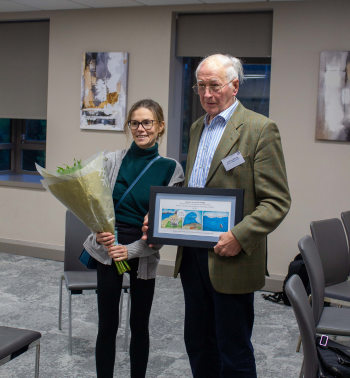
Dr Sharon Jewell PhD and Prof Strong were invited to host last year’s four-day international Conference on Spreading Depolarisations (iCSD2025) in London, with KHP Neurosciences programme team providing logistical support to make the event a success. The very first of these conferences was hosted at King’s College Hospital in 2004.
Meeting at annual iCSD sessions - COSBID investigators have worked together to develop clinical protocols, improve monitoring methods, develop analysis techniques, and share new relevant findings from the field of basic neuroscience.
December’s conference of 102 delegates shared progress with these efforts – including on the clear association with SDs and poor outcomes in traumatic brain injury and aneurysmal subarachnoid haemorrhage, plus the high prevalence of these conditions worldwide. A potentially important theme of several presentations was increasing evidence of interaction of post traumatic and other forms of seizures with SDs, suggesting that control of SDs might help control some seizures, and vice versa.
Among messages exchanged after iCSD2025 one of the keynote invited speakers - and a highly regarded and experienced neuroscientist - wrote to Prof Strong:
"You [“and COSBID”: adds Prof Strong] have established a new field that has wide reaching clinical implications and very stimulating fundamental science on brain function.”
Future priorities
COSBID aims to reduce the level of physical and mental dependency associated with these conditions and reduce the time and high level of intensive care required for this group of patients.
The current research priorities include:
- identifying methods to minimise occurrence of SDs;
- making the non-invasive detection of SDs possible, including with the use of optical methods.
At present, reliable detection is only possible in patients requiring a craniotomy: this offers open access to place electrodes on the brain surface. This means that in most patients with the same conditions who do not need neurosurgery, it is currently impossible to determine the presence of SDs.
Since critical skills and resources are available in only a few major centres worldwide - and no single centre working in isolation has a large enough caseload required to generate reliable results in a reasonable time frame - multi-centre collaboration such as COSBID serves to allow investigators to exchange findings, review them, and coordinate work plans.
COSBID members are running a first Phase 2 study on SD control based on simple alterations to hospital Intensive Care Unit routines and pharmacotherapy. This is already showing promising initial findings.