Learning Hub
 Sign up to our newsletter

12 March 2026
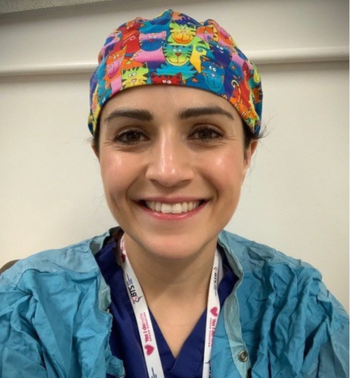
Dr Hannah Maple explains how funding from the KHP Centre for Translational Medicine helped her carve our dedicated research time to develop a psychological prehabilitation package for patients.
Please describe your day-to-day work and your research interests?
I am a consultant transplant and dialysis access surgeon based at Guy’s and St Thomas’ NHS Foundation Trust (NHS FT).
My day-to-day work is quite varied as I cover parts of both the adult and paediatric transplant service, which involves working in different hospitals in both London and Kent. My clinical work is a combination of on-calls, seeing patients in clinic, and operating on both elective and emergency cases.
My research interests are in health psychology. I am particularly interested in the psychosocial aspects of living donation, including altruistic donors (people who choose to donate a kidney to a stranger) and psychological prehabilitation of patients before they have surgery.
What impact can your research have on patients and health service providers?
My work focuses on psychosocial outcomes and the mind and body connection; in particular, the impact of stress on physical recovery.
I am looking to develop a psychological prehabilitation package that allows patients to psychologically prepare for their operation, with the intention of making it a nicer experience for them and improving both their physical and psychological outcomes.
This intervention is purposefully designed to be personalised and deliverable in the patient’s own time, such that it reduces the burden of hospital visits and can be tailored to the individuals’ needs.
You received Catalyst funding from the KHP Centre for Translational Medicine, how has this helped your research?
The catalyst award funding has been a gamechanger for me, as I found it very difficult to carve out protected research time whilst working full time clinically.
Developing a research idea in such a way that it allows you to compete for funding at a level that is on par with other researchers involves dedicated time away from the clinical environment. The catalyst funding has allowed me time to think, have meetings with collaborators and eventually will help provide me with pilot data, which will then contribute enormously to a future grant application.
How does working within KHP benefit your research?
I am very fortunate to be working within King’s Health Partners as there are lots of bright and enthusiastic people who contribute both clinically and academically.
My work involves collaborators from different hospitals and across different schools within the university, so having the opportunity to work with such a broad variety of people is fantastic.
What are the next steps for your research and how would you like to see it develop?
Whilst my current work is focussing on living kidney donors and their recipients, I am hopeful that a successful psychological prehabilitation intervention will help people having many different types of surgery.
I am also hopeful that the intervention will be sufficiently modifiable to benefit those who are awaiting an organ transplant from the deceased donor waiting list, as this really can be an extraordinarily difficult time full of apprehension and uncertainty.
Finally, my hope is that the intervention may also be useful for caregivers of people with chronic illnesses, as caregiver burden is a real problem that is underestimated in many instances.
Find out more about the KHP Centre for Translational Medicine.