Learning Hub
 Sign up to our newsletter

Introduction
The King’s Health Partners Centre for Translational Medicine is focused on high-quality early translational research - accelerating innovation from discovery to patient benefit.
We have globally leading capabilities in medical technologies, and advanced therapies and drug development.
Together, these strengths connect across the life course, addressing multiple long-term conditions and serious multimorbidity, reflecting the realities faced by patients, families and communities.
This enables us to develop, test and translate novel interventions in NHS settings, and inform our areas of disease focus.
On this page you can find out more about these areas of focus and our impact to date.
Cardiovascular and metabolic health
Cardiometabolic conditions are the leading cause of morbidity, disability and health inequalities in the UK, accounting for 1 in 4 deaths. These conditions cause significant life expectancy gaps, with those in the most deprived areas in England being nearly twice as likely to die from cardiovascular disease as the least deprived. They are also among the leading causes of morbidity and mortality in south east London.
Impact case study
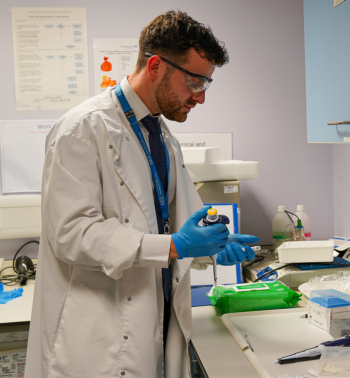
CTM funding helped Dr McNally build collaborations with colleagues from the Centre for Adherence Research and Education – providing the skills and expertise needed to conduct high quality research, which ultimately benefits patients.
“I believe collaboration is key in becoming a successful clinical academic in order to generate new ideas and improve the quality of research. Working in a partnership allows me to collaborate with people from a wide range of disciplines” - Dr McNally
Dr McNally subsequently published ethnicity, sex and hypertension-mediated organ damage (Hypertension 2026); and was honoured with a British Heart Foundation career development award.
- Gama (Postdoctoral): PREVENT-CVRM: point-of-care testing and integrated pathway in deprived south-east London communities.
- Padayachee (Predoctoral): DNMT3A clonal haematopoiesis in STEMI.
- Bromage (Pilot): PET-CT for cardiac inflammation post-MI in clonal haematopoiesis.
- Rahman (Postdoctoral): PRECISE-CMD: phenotyping coronary microvascular dysfunction.
Immune and infection mediated disease
Immune and infection mediated diseases significantly reduce quality of life and impose a substantial economic burden on individuals, healthcare systems, and society. Advancing this field through translational research requires integrated approaches to address tolerance, inflammation and recovery.
Impact case study

“I am extremely fortunate to have received funding through the KHP CTM Pre-doctoral Clinical Research Excellence Fellowship. This opportunity has been a pivotal stepping stone in my clinical academic career and has enabled me to develop funding applications for a doctoral fellowship.
“During this fellowship, I have developed a preliminary psoriasis severity prediction model, integrating clinical and genetic factors. Through this work, I have gained new skills in bioinformatics, statistical analyses and prediction modelling techniques using R language and large-scale data sets.
“I have attended national and international training courses and conferences, which have broadened my technical skillset and professional networks. A particular highlight has been working closely with the Psoriasis Association (the UK’s leading charity for people with psoriasis) through national public engagement initiatives, to involve people with psoriasis and the public in shaping my research at every stage.
“Ultimately, this would not have been possible without the generous support from KHP CTM, and I am incredibly grateful!” - Dr Sagoo
- Coumbe (Predoctoral): tissue-resident T cells in immune-related adverse events of checkpoint inhibitor therapy.
- Kordasti (Essentials): predictive immune markers in MPN (Crick £327k) and bone-marrow organoid platform.
- Smith / Mahil / Wu / Cope / Perucha: new tissue-resident effector cell collaboration with UCB (3 PhD studentships).
Cancer
Our ambition is to improve outcomes across the whole care pathway from early detection to precision treatment while tackling inequalities in access and survival. This involves rapidly translating scientific discoveries into clinical use, particularly through cell and gene therapies, to enable a new generation of transformative, personalised treatments tailored to individual patients.
Impact case study
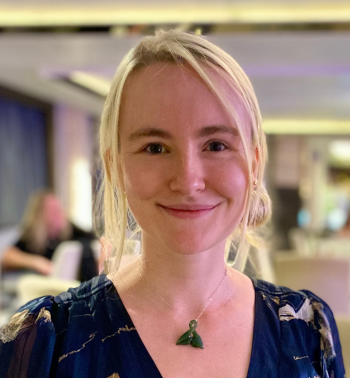
“The funding was a crucial step in developing my research. The pump-prime funding gave me protected time away from my clinical role to focus on building the foundations of the project. During this period, I developed the underlying data infrastructure, undertook training in research methods and generated preliminary AI feasibility models. These activities are difficult to pursue alongside a full-time clinical role but are essential for developing a strong doctoral research proposal.” - Victoria Butterworth.
CTM funding led to a successful application for an MRC Clinical Research Training Fellowship to further her studies.
- Awan / Sawyer / Ng (Essentials): ctDNA and exosome Nanopore sequencing for early cancer detection in Rapid Diagnostic Centre.
- Irshad/Karagiannis (Essentials): TNBC vaccine antigen pipeline; £7M Breast Cancer Now Programme Award (2025).
- Wells (Predoctoral): Black male prostate cancer organoids.
- Brewin (Catalyst): alpha globin deletions and stroke screening in children with sickle cell anaemia.
- Sambasivan (Postdoctoral): imaging cancer stem cells in therapy-resistant breast cancer.
- Arora (Catalyst): translational pathway modelling and early validation in head and neck cancer.
- Grigoriadis: multimodal tissue-state imaging (Wellcome £3.1m).
- Albed Alhnan: total-body nuclear imaging (EPSRC £7.6m).
Brain health and neuroscience
Our challenge in brain health and neuroscience is to understand and predict how resilience declines and recovery processes unfold across the lifespan - from early development through lifelong health and mental health conditions to ageing and neurodegeneration - by integrating advances in neuroscience of mental health with cutting edge brain modelling and imaging.
We support a mind and body approach - integrating mental and physical health across research to improve outcomes for people and communities.
Impact case study
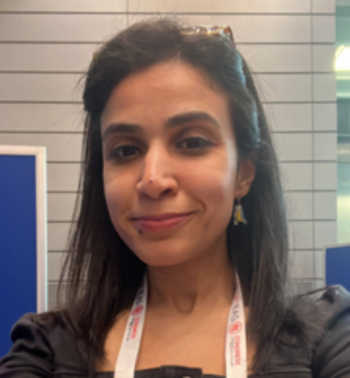
“KHP pilot funding was instrumental in kick-starting the pilot stage of my project, enabling me to establish proof of concept and assess the feasibility of using novel tracers in my research. This early support made future research in this area possible by generating the preliminary data needed to move forward with confidence.
“Crucially, the funding also gave me the time and headspace to plan a future career pathway in academia. During this period, I explored and applied for a range of internal and external funding opportunities. This, in part, culminated in securing a part-time post at the IoPPN as a Clinical Research Fellow... working towards a PhD.” - Dr Wiaam Al-Hasani.
Child and maternal health
There are substantial health inequalities in south east London, and disparities in health outcomes are particularly pronounced in women and children – especially among women from black African, black Caribbean, South Asian and other non-white British ethnic group. We are working to ensure safer starts, and better long-term outcomes for women and children.
Impact case study
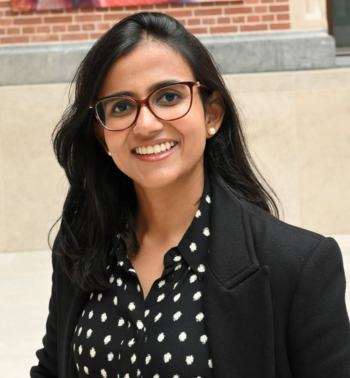
NEC is a devastating inflammatory bowel disease that affects around 5% of very preterm or low-birthweight babies, causing significant mortality and morbidity.
“An equally valuable aspect of this fellowship has been developing strong patient and public involvement (PPI) partnerships. I have collaborated with the Great Ormond Street Hospital Parent and Carer Advisory Group, who have supported this project. Their insights have shaped the way I communicate research aims, refine study design, and ensure that the outcomes remain aligned with patient priorities. Engaging with this group has strengthened my understanding of co-production in research and deepened my appreciation of how patient voices can drive meaningful, translational impact.” - Dr Anangsha Kumar
- Amusa (Predoctoral): gestational diabetes in Black women, UNiCoRN/Diabetes Africa partnership; 42% minoritised participation.
- Tribe (Catalyst): NLP-based identification of under-coding of hypertensive pregnancy.
- Day (Postdoctoral): first RCT of AI-assisted foetal ultrasound (NEJM 2025); Fraiya KCL spinout.
- Clark (Postdoctoral, NMAHP): PERFORM midwife-led digital peripartum fluid pathway.
- McCabe (Predoctoral, NMAHP): pregnancy outcomes in endometriosis.
- Lloyd (Pilot): Doppler-gated, motion-corrected 4D flow fetal cardiac MRI.
- Hart (Catalyst): continuous aEEG in preterm infants.
- The Fraiya Spin out (Thomas Day, Post-doctoral Fellow) has entered a collaboration with Canon Medical, accelerating the real-world deployment of the AI assisted fetal ultrasound across the NHS.
- The INSIGHT study, which is part of the Essentials award led by Prof Rachel Tribe has a collaboration with Pregnolia, which has supported the validation of a new device for measurement of cervical stiffness in women at risk of preterm birth.