Learning Hub
 Sign up to our newsletter

15 May 2026
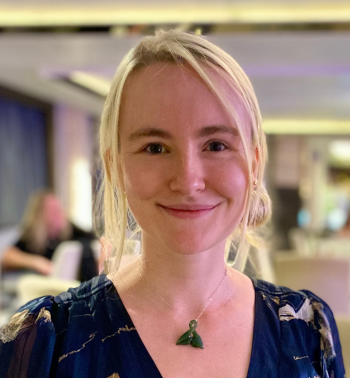
Funding from the KHP Centre for Translational Medicine has allowed Victoria Butterworth to progress her research alongside her work as a clinical scientist. It led to a successful application for an MRC Clinical Research Training Fellowship to further her studies. Learn more about her work below, and how it aligns with KHP's key strategic themes of delivering personalised health and accelerating digital health.
Please describe your day-to-day work and research interest(s)?
I am a clinical scientist in radiotherapy physics, working as part of the multidisciplinary team that delivers radiotherapy to patients with cancer. Radiotherapy physicists are responsible for the technology used to plan and deliver treatment, and we work closely with clinicians and radiographers to ensure that radiotherapy is delivered safely and accurately for every patient.
More recently, my work has focused on the use of artificial intelligence (AI) in cancer care. This includes curating high-quality clinical data, evaluating commercial AI tools and developing in-house AI models. I was part of the team that developed and implemented head and neck auto-segmentation tools that are now routinely used in clinical practice at Guy’s and St Thomas’ Foundation Trust (FT) to support radiotherapy planning.
My research centres on building AI models to automatically segment tumours on radiotherapy imaging and to predict the risk of cancer recurrence. An important part of this work is assessing potential bias within models and ensuring that AI tools perform equitably across different patient groups. This work is supervised by Dr Teresa Guerrero Urbano, Consultant Clinical Oncologist at Guy’s and St Thomas’ NHS FT, and Prof Andy King, Lead of the Motion Modelling and Analysis Group (MMAG) at King’s College London.
What is the potential of your research to have a positive impact on patients and their personalised care?
Radiotherapy is already highly individualised. Treatment plans are carefully designed around each patient’s tumour location and surrounding healthy organs, and clinicians routinely adjust treatment strategies based on clinical judgement and experience. However, many decisions are still informed primarily by evidence from large patient cohorts rather than precise, individual risk estimates.
My research aims to build on this existing personalised practice by developing tools that integrate detailed clinical, imaging and treatment information to better estimate an individual patient’s risk of cancer recurrence.
In the future, this could support clinicians in refining treatment intensity, follow-up schedules, and supportive care to each patient’s needs. For example, patients identified as being at higher risk of recurrence may benefit from intensified treatment or closer surveillance, while those at lower risk could potentially avoid unnecessary treatment-related toxicity.
This aligns closely with the KHP focus on personalised health. The long-term goal is to improve outcomes while reducing avoidable side-effects, and to do so in a way that is safe, transparent, and fair for all patient groups.
You received funding from the KHP Centre for Translational Medicine (CTM), how has this helped your research?
The funding was a crucial step in developing my research. The pump-prime funding gave me protected time away from my clinical role to focus on building the foundations of the project. During this period, I developed the underlying data infrastructure, undertook training in research methods and generated preliminary AI feasibility models. These activities are difficult to pursue alongside a full-time clinical role but are essential for developing a strong doctoral research proposal.
The fellowship also enabled me to work closely with other clinical and technical teams including Guy’s and St Thomas’ NHS FT Clinical Scientific Computing team, broadening my understanding of model implementation, and strengthening the translational focus of the work. The foundations established through CTM funding were instrumental in enabling me to apply successfully for an MRC Clinical Research Training Fellowship.
What are the next steps for your research and how would you like to see it develop?
The next stage of my research will be undertaken through an MRC Clinical Research Training Fellowship which will support a PhD focused on the development and validation of AI-based recurrence risk prediction models in head and neck cancer.
During the PhD, I will focus on model development and validation as well as looking forwards to how these tools could be integrated safely and effectively into clinical workflows. A key priority will be to assess potential sources of bias to ensure AI systems do not inadvertently reinforce existing healthcare inequalities.
Looking ahead, I would like this research to grow into larger, multi-centre collaborations and to contribute to a future where personalised, data-driven approaches are embedded within routine cancer care. Ultimately, I aim to continue a clinical academic career that bridges clinical service and research, helping to translate new technologies into meaningful benefits for our patients.