Learning Hub
 Sign up to our newsletter

11 March 2026
Nadya Isack tells us about her work as a Patient and Public Involvement and Engagement (PPIE) advocate, and how lived experience is informing a major trial exploring integrating digital innovation in weight management.
Can you introduce yourself?
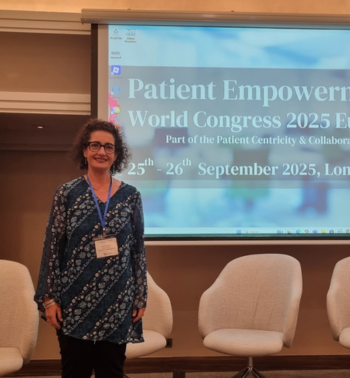
My name is Nadya Isack. I am a person living with obesity, a Patient and Public Involvement and Engagement (PPIE) advocate, and founder of Empower Health Initiative. I also work full-time in the corporate sector.
I include this deliberately — patients are not “just patients”. We are professionals, carers, leaders, and decision-makers.
My journey with obesity has included surgery, emergency admissions, stigma, and long-term health management. At my highest weight, I was 164 kilograms with a BMI of 61. After traversing the difficulties of getting effective treatment for obesity, and going through the entire gamut of interventions including two different bariatric surgeries, I finally had a successful gastric bypass at University College London Hospital in December 2018.
Across this journey I have experienced weight bias in healthcare settings, in complex surgical pathways, as well as in the long-term management of a chronic disease that is still widely misunderstood. My personal lived experiences have shaped how I view healthcare and research. They have also given me insight into what it feels like to navigate services that are not always designed with the patient in mind.
Today, alongside living with obesity, I work as a PPIE advocate and founder of Empower Health Initiative.
Why did you choose to get involved in PPIE?
I chose to get involved in PPIE because I saw how often decisions about obesity care were made without meaningful input from people living with the condition.
Too often, obesity is reduced to simplistic narratives. Yet it is a complex, chronic, relapsing disease influenced by amongst others: biology, psychology, environment, and social determinants of health.
I wanted to move from being a recipient of services to being part of shaping them. PPIE allows patients to move from the “standing seats” to the table — not as tokens, but as partners.
Can you tell us about a current trial on a digital weight management service?
I am supporting a trial by National Institute for Health Research (NIHR) and Office for Life Sciences on integrating digital innovation in weight management. The trial aims to assess the acceptability, clinical, and cost-effectiveness of Roczen – a digital weight management tool.
Digital weight management services offer enormous potential — greater accessibility, flexibility, and reach. However, digital does not automatically mean inclusive.
Within the PPIE group, I have focused on ensuring the patient journey feels realistic, safe, and respectful. We have discussed issues such as digital literacy, language barriers, privacy concerns, and the emotional impact of remote weight monitoring. For example - daily data logging may seem straightforward in theory, but for someone managing work, caring responsibilities, and multiple health conditions then it can feel overwhelming.
We have also explored tone and language — ensuring that communication does not reinforce stigma or reduce people to BMI numbers. A digital service must not remove the human connection that many people living with obesity need in order to feel supported.
By sharing lived experience, I hope to ensure that this trial does not simply test a platform, but tests a model that patients can genuinely engage with and sustain.
How has the PPIE group impacted the design of this study?
Application and study design:
PPIE colleagues were involved at the start with developing the original application for funding – so shaped how the study was designed from the very beginning.
Our contribution was commended by the NIHR panel – both in the application process (e.g. for the videos that we shared at the interview) and in the planned approach to embedding PPIE within the study.
PPIE and study governance:
The PPIE advisory group aims to meet monthly. These meetings are owned and coordinated by the PPIE representative, chaired by myself as lead PPIE co-applicant for the trial, with other members of the study team attending.
There is also PPIE representation on the monthly Trial Management Group meeting to ensure PPIE colleagues are involved in decision-making forums about the study.
PPIE involvement in research delivery:
We’ve heard that PPIE colleagues continue to contribute to the development of the study in a meaningful way. It has been fed back that we have been key in ensuring that communications and materials for the study and the processes for recruitment are designed from a patient-perspective.
Since the study has opened to recruitment, we have also helped review and revise our approach to engaging patients about the study to improve uptake. This has included suggesting FAQs to response to patients’ questions and planning short videos for patients to explain the study in lay-terms.
Our aim is for our PPIE representative to have an active role in data collection and analysis as peer researchers. This could be through undertaking interviews with patients, supporting with data analysis and interpretation, shaping the outputs to ensure the patient perspective is voiced, or ensuring that any outputs are appropriate for patient/public audiences. We are mindful and advocate for those engaging from diverse and/or under-served communities.
As part of taking a more active role, PPIE representatives will be appointed on honorary contracts with Guy’s and St Thomas’ NHS Foundation Trust and receive bespoke and mandatory training. Alongside developing our personal and professional skills, we hope this will provide us with a deeper understanding of the NHS.
What have you learned through the experience?
I have learned that many researchers genuinely want to design better studies — but they may not always see the barriers that feel obvious to patients.
I have also learned that language matters enormously. A single phrase can either build trust or reinforce stigma.
Most importantly, I have learned that when patients are involved early — at concept stage rather than at the end — the entire study becomes stronger. Recruitment improves, retention improves, and the intervention is more likely to be usable in the real world.
What would your advice be to a patient or member of the public wanting to get involved with PPIE?
Your lived experience is expertise! You do not need clinical knowledge or academic credentials. You need honesty, curiosity, and the confidence to ask questions.
Start small — join a PPIE group linked to a service you care about. Be clear about what you can contribute and what you want to learn.
And remember: your voice has value as does your time. Therefore renumeration for your lived experience is also expected. There are NiHR guidelines for this, of which all researchers should and must be aware of.
Ultimately, supporting research at all levels of academia has shown me how powerful lived experience can be in shaping studies, grants, and projects that truly work for patients.
What would be your top tip for researchers to make the most of working with patients and the public?
Involve patients early and listen with openness.
Meaningful PPIE is not about asking patients to validate decisions already made. It is about co-design.
Create psychological safety in meetings. Avoid jargon. Be transparent about what can and cannot change. And recognise that lived experience offers a form of expertise that complements academic knowledge.
When researchers and patients work as partners, the result is not only better research — it is research that feels human and applicable in the real world.
Working with King’s Health Partners has reinforced my belief that collaboration across clinical, academic, and patient communities can happen and drive meaningful change. Trials that integrate digital innovation with genuine patient insight have the potential to widen access — but only if designed inclusively.
My hope is that this work contributes to a future where people living with obesity feel respected, understood, and supported — both in research and in care.
I am grateful to the entire research team involved in the trial and fellow PPIE contributors for their openness and collaboration.
Find out more about Nadya and her work at Empower Health Initiative.
Find out more about the work of KHP Diabetes, Endocrinology, and Obesity - and how KHP is working to accelerate digital health.