Learning Hub
 Sign up to our newsletter

23 March 2026
What is your role?
I’m a Programme Manager in the Mind & Body Programme at King’s Health Partners (KHP). I lead a clinical–academic portfolio focused on reducing physical health inequalities for people living with severe mental illness (SMI) across south east London.
My role is grounded in close collaboration with colleagues across KHP, enabling us to rapidly identify gaps in care, test, and evaluate new approaches in real-world settings, and translate evidence into sustainable practice. Using implementation science methodologies, I support teams to embed effective interventions into routine care, helping to strengthen local healthcare services and hopefully, improve outcomes for our local SMI population.
What do you enjoy most about your role?
I love the variety and impact of the work. I particularly enjoy collaborating with passionate colleagues across services who are deeply committed to improving patient care. Bringing different perspectives together to solve complex challenges is incredibly energising.
I’ve also really valued sharing our work more widely. For example we’ve been able to continue to share learning from our multi-award-winning programme Integrating our Mental and Physical Healthcare Systems (IMPHS) since it ended in 2022 and it is now recognised nationally and internationally for advancing integrated care for people with SMI. Most recently in a mental health original research article published by the BMJ. It feels rewarding to see our learning informing practice and contributing to wider conversations about improving integrated care.
What inspired you to get into this work?
I’ve always been motivated by roles that create meaningful change for people and communities. Early in my career, while completing my master’s degree in clinical psychology, I saw first-hand how mental and physical health needs were often treated separately, leaving patients to navigate fragmented systems. That sparked my interest in work that strengthens integration and reduces inequalities.
Working in a partnership like KHP — where research, clinical teams, and education come together — offers a unique opportunity to influence change at scale. Knowing that our work helps make healthcare more compassionate, equitable, and joined-up continues to inspire me.
How does your work impact the lives of communities?
Much of my work focuses on reducing the stark health inequalities experienced by people with SMI, who often face barriers to accessing timely, high-quality physical healthcare. By improving pathways, training staff, and designing tools to support integrated care, we help ensure people are seen as whole individuals rather than separate conditions. Our programmes aim to support earlier diagnosis, better management of long-term conditions, and more personalised care — ultimately creating systems where no one falls through the gaps.
At present, we are working with South London and Maudsley, King’s College Hospital, and Guy’s and St Thomas’ NHS Foundation Trusts on two inpatient-focused projects. One explores integrated diagnostic spirometry testing, and another improving sexual and reproductive health interventions for people with SMI. We’re proud to work in partnership in this way, learning in real time and supporting better outcomes for our local patients.
What is the benefit of working in partnership?
Partnership working is at the heart of everything we do. Complex health challenges rarely sit within a single organisation, so solutions can’t either. Working across KHP — and with the support of our wider system partners— enables us to combine clinical expertise, research insights, operational knowledge, and lived experience.
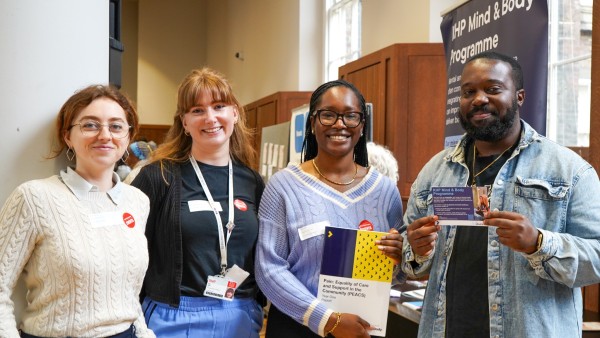
For example, our latest collaboration with the South East London Cancer Alliance (SELCA) on improving outcomes for people with SMI in cancer pathways is a great example of what partnership makes possible. At a recent Mind & Body Share and Learn session colleagues explored key findings from the collaborative project. By aligning priorities and sharing skills, we can design interventions that are more effective, more sustainable, and ultimately reach more patients across south east London.
What would be your career top tip?
Stay curious and open to learning — especially from people whose expertise is different from your own. Some of the most valuable insights in my career have come from conversations with clinicians, patients, or colleagues working in areas I knew nothing about.
Don’t underestimate the importance of building relationships and investing in the people around you; collaboration is where the most meaningful work happens.
And finally, be guided by the impact you want to create. When you stay connected to your purpose, it’s much easier to navigate challenges and find opportunities that genuinely energise you.