Learning Hub
 Sign up to our newsletter

25 May 2026
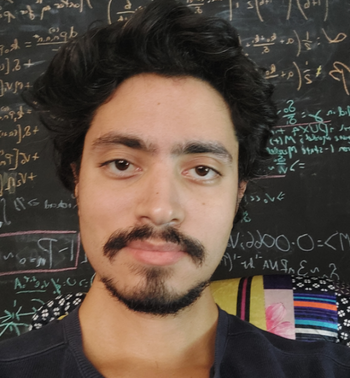
King’s College London AI+ senior fellow, Dr Christopher Banerji, reflects on his career journey. He explores who is responsible for making sure clinical AI tools are safe and answers how trust plays a vital part in making clinical AI tools successful.
What is your role?
I'm one of the AI+ senior fellows at King’s College London. My role was customised with the King’s Clinical Academic Training Office (KCATO) to be a dual clinical academic post. So, my time is split between my research and my clinical practice working as a histopathologist.
Can you tell us a bit about your career journey?
I initially trained in mathematics at University of Oxford before completing a PhD in computational and cell biology at UCL. My early research involved a mixture of mathematical and experimental approaches to understanding several pathologies, including breast cancer and lung cancer as well as rare diseases such as neuromuscular disorders.
After my PhD I retrained in medicine at Imperial College London and moved into a role at Guy’s and St Thomas’ NHS Foundation Trust (FT) in 2020. The COVID-19 pandemic was a challenging time to be a doctor, but I learned a lot working at Guy’s and St Thomas’ NHS FT.
I later went on to work with the Alan Turing Institute on the Turing Roche strategic partnership. Our main agenda was to develop safe AI for clinical purposes, as while there's lots of exciting tools out there, to deploy them in high-risk clinical settings, we need to think carefully about safety, autonomy, explainability, uncertainty, bias, and regulation. After six months I returned to medicine as a part time histopathologist working at University College London NHS FT, alongside my academic work at the Turing, and I have recently moved to King’s Health Partners to continue my clinical-academic career with King's College London.
What inspired you to get into this work?
Maths was my first passion, and I always knew I wanted to apply mathematics to complex real world problems. Medicine was an exciting frontier, where mathematics was still evolving into a broadly useful framework, I wanted to play a part in this evolution.
While I was at the Turing Institute, ChatGPT was released and the application of AI to medical problems became a serious prospect. The pace at which things were moving was exciting to me as a mathematician, but quite frightening to me as a clinician, and that really motivated me to stay working in this area. I want to be part of the collaborative effort to build healthcare AI tools safely.
Who makes sure AI tools are safe in healthcare?
It is scary but I don't think anyone has a good answer to that question. There is no clear clinical oversight body for AI in general, and for me that is really concerning. While regulation and policy are maturing, this is at a much slower pace than the development of the technology itself and contains lots of moving parts. I feel that what is missing is a clinical layer, something like the Royal Colleges, but for clinical AI. A body like that can take responsibility for what clinicians should be doing, issue guidelines, review the evidence, perform audits, and educate the community about safe practice. We need a single source of truth for the regulation of clinical AI, to avoid conflicting messages and make sure these tools are safe for healthcare, and that is what I'm pushing for.
Can AI be used to improve the delivery of AI tools in healthcare?
It is an interesting idea and a lot of people are looking to do that, but we need to be careful. A few years ago, an interesting paper on Model Collapse was published in Nature. The paper explained how large language models scraped the internet for content and used it to train and optimise their models. But increasingly, as more people use AI, a lot of the content on the internet is now generated by these models. The theory shows that if we continue to train models on their own outputs eventually they lose the ability to produce realistic outputs, sort of like a snake eating its own tail. This is just one example, and I would not say we cannot use AI to support AI deployment altogether, but as we start to rely on this technology more, we need to be increasingly aware of its limitations.
How does trust shape the use of clinical AI tools?
If it's not trusted, it's almost useless, in my opinion. You can have a fantastic tool that is 100% accurate, is the fairest thing in the world, and looks great and shiny. But if clinicians don't trust it, they won't use it. If patients don't trust it, they won't consent to its use. That's the biggest part of what we're trying to do. We’re working with clinicians to make sure these tools fit into their practice, and with patients to understand what people are worried about and how we can best address their concerns.
The other thing I'm working on is explainability in AI. We need explanations in clinical AI, because without explanations we can't communicate as clinicians. We can't tell our patients what we're doing or why we're doing it. The problem we currently face is that what a computer scientist considers a good explanation is not necessarily what a doctor or a patient would consider a good explanation. And studies have shown that when explanations are not aligned to what clinicians understand, it drops the trust in the tool. But when explanations are aligned there's much greater trust. We're trying to build tools that think like doctors and talk like doctors. I hope in that way we can increase their trust.
How can health professionals bring AI into their work safely?
The safest thing I think we can do is to take responsibility for our use of clinical AI tools. To speak up when a tool is useful, and, more importantly when you think a tool might be dangerous. When drugs have adverse events we report them. That helps us understand as a community when things are safe and when things are not. I think we need to do this as clinicians with AI. That’s how we form a community which could evolve into a governing body to make sure these tools are used in a safe and responsible way. If we can empower the clinical community to do that, then we've got a real chance of bringing this technology to the NHS in a positive way. And if we don't, we run the risk that we drive inequalities and do more harm than good.
How can King’s Health Partners support the delivery of safer AI tools?
When I was at the Alan Turing Institute, we ran a workshop bringing together pathologists and AI researchers working in pathology. One of the questions we asked was how optimistic people were about AI entering clinical practice. Unsurprisingly, clinicians tended to be more cautious than researchers.
Part of that reflects the realities clinicians deal with every day: patient safety, workflow integration, regulation and accountability. Researchers building these systems are often naturally optimistic, but may not always see the full complexity of clinical deployment unless they work closely within healthcare environments.
Interestingly, we also found that comfort with AI was driven less by job role and more by exposure. The more experience people had working with AI systems, the more comfortable they became, whether they were clinicians or researchers.
For me, that highlights the importance of genuine partnership between clinicians and AI developers. Close collaboration improves trust, helps researchers better understand clinical needs, and ultimately leads to tools that are safer, more useful and more likely to be adopted in practice. Without that partnership, there is a real risk of building systems that are technically impressive but not truly fit for clinical use. Fostering and building these partnerships is something I see as an incredibly valuable contribution of KHP.