Learning Hub
 Sign up to our newsletter

24 July 2026
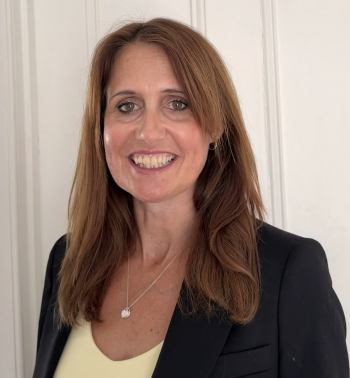
Emma Menzies-Gow, Associate Dean - Postgraduate Taught Studies at King's College London, explores the importance of continuous professional development – and how to overcome the barriers and find your path.
Please could you introduce yourself and your background?
I am a registered nurse currently working at King’s College London as Associate Dean for Postgraduate Taught Studies within the Faculty of Nursing, Midwifery and Palliative Care.
After completing my undergraduate degree at King’s College Hospital in Nursing Studies in 1997, I specialised in cardiology working at St George’s Hospital in south west London. Since then, I have worked in healthcare education at three universities predominantly delivering specialist education for qualified nurses.
I returned to King’s College London as a senior lecturer in 2024 and it’s great to be back! My current role is focused on leading our continuing professional development (CPD) portfolio, which includes short courses, top-up and master’s degrees for qualified healthcare professionals.
What is CPD and why is it important?
CPD usually refers to educational activities that support the development of knowledge and capabilities for your current professional role and to support future career development.
Health and care professionals adopt a life-long approach to learning after qualifying to ensure they continue to deliver contemporary, evidence-based care. CPD can self-directed, such as reading journals or attending webinars, or a formal programme of study, such as accredited programmes at a university or local practice development initiatives within practice settings.
While undertaking CPD is a requirement to maintain professional registration, it also enables us to progress our careers by specialising in a particular clinical field or developing professional skills needed for roles that include elements of education, research, leadership and management.
What sources of CPD are available to KHP staff?
King’s College London is frequently chosen by health and care professionals working within King’s Health Partners for their education and training. King’s College London offers a range of short courses and programmes that can be undertaken on a part time basis, online or in-person, alongside their professional work. Short courses are usually between five and ten study days in length and are designed to support the development of knowledge and skills that will benefit patients and support future career development. These include modules on Advanced Assessment for Non-Medical Practitioners, Independent and Supplementary Prescribing for Healthcare Professionals, Tissue Viability, Healthcare Leadership and Artificial Intelligence in Healthcare.
We offer a number of degree programmes too, taken part time over one to three years. There is a top-up degree in Nursing Studies, most often taken by nurses joining the NHS from overseas wishing to achieve a first degree, and a selection of postgraduate (PG) programmes, too, that reflect the expertise of the academic team, ranging from PG Certificates in Healthcare Management, Critical Care, Diabetes and Clinical Research, PG Diplomas that support the training of Health Visitors and School Nurses, through to masters degrees, such as our multi professional programmes in Advanced Clinical Practice programme and Palliative Care.
How can we overcome barriers to CPD?
There can be a number of barriers that make it difficult for healthcare staff to undertake formal CPD, with the most common ones being funding, study leave and juggling academic study with a busy professional role and family life. Setting out your career aspirations within your annual review process is a great opportunity to let your line manager know what CPD would help you.
If your employer is not able to offer funding for you, it is possible to fund your CPD yourself, perhaps with a postgraduate student finance loan or through various scholarships such as the Burdett Fellowship.
How are you working across KHP to enhance the CPD offer?
Staff from across the partnership are involved in teaching on our CPD short courses and programmes, ensuring our education is evidence-based and relevant for contemporary clinical practice. We also work closely with supervisors and assessors in practice supporting students on our CPD programmes associated with professional qualifications, such as Specialist Community Public Health Nursing and Advanced Clinical Practice.
We liaise with the Education Leads within our partner Trusts to explore how we can develop innovative education that aligns with the strategic priorities within those organisations. We are currently finalising plans for the first collaboratively designed and delivered Master’s programme within King’s Health Partners, an MSc in Cardiorespiratory Care. The programme will combine teaching from internationally recognised clinical centres specialising in cardiovascular and respiratory care at Guy’s and St Thomas’ NHS Foundation Trust and King’s College Hospital NHS Foundation Trust with the education and research expertise at King's College London. The programme will be delivered on campus at King’s College London and will be open to healthcare staff working in acute and community settings within KHP and beyond. It will be published in the online prospectus on the King’s College London website in due course.
What should students know about the differences between their degree and CPD?
CPD builds upon your first degree and offers the opportunity to learn in bitesize chunks with a short course or a more formal programme of study at postgraduate (masters) level. Masters level builds on the skills developed at degree level and, at King’s College London, we support students with the transition into postgraduate study.
Finally – what are your career top tips?
Working within the health professions offers incredible opportunities for a varied and fulfilling career with CPD helping you get you to where you want to be! If you know you want to work towards a specialist clinical position, a leadership position or to develop your clinical academic career, you could choose specific CPD that will specifically support you with this, such as MSc Diabetes Care and Management, MSc Healthcare Management and MSc Clinical Research Delivery.
If you’re not sure which programme is right for you, you could start by thinking about ‘where do I want to be working in five years’ and then working out how CPD can support you with this. Many students start with a short course first and to see how they get on, especially if studying at postgraduate level in the UK for the first time. The academic credits achieved can often be transferred into a masters award and so this is a great way to gradually finance your CPD while balancing work, life and study.
Please do get in touch with me if you need some guidance, I’m always happy to help.