Learning Hub
 Sign up to our newsletter

23 June 2026
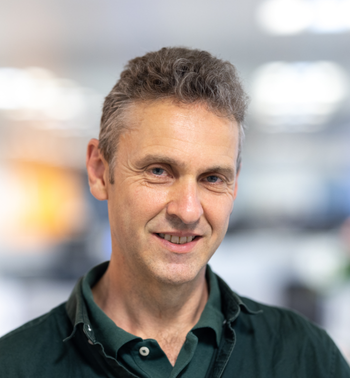
AI healthcare innovations should aim to improve outcomes for all of the patients they have been built for. However, research has found that bias can lead to innovations only benefitting select groups of patients. If bias can interfere with the impact of AI technologies, we ask Prof Andrew King, School of Biomedical Engineering and Imaging Sciences, King’s College London, can we advance digital health without leaving people behind?
The promise of AI in healthcare
Hardly a day goes by without a new story about AI in the media. Some headlines promise revolutionary breakthroughs such as AI solving an 80-year-old mathematical conjecture, while others warn about serious risks like AI chatbots exhibiting racist or discriminatory behaviour. For many people, it can be difficult to know what to believe.
In healthcare especially, AI has enormous potential, from speeding up diagnosis to reducing pressure on overstretched clinicians. But important questions remain. Do some of the risks we hear about in other domains also apply in healthcare? Can we develop AI technologies in a way that benefits everyone?
Bias has been found in AI innovations
Many healthcare AI systems can now perform specific tasks as well as - or sometimes better than - clinicians. Others can automate routine jobs that previously took doctors a great deal of time. For example, cardiologists used to spend around 20 minutes per patient manually outlining parts of the heart on MRI scans to measure how effectively the heart pumps blood. AI systems can now perform the same task in seconds. But AI models are only as good as the data they are trained on. They learn patterns from existing data and if certain groups are underrepresented in that data, AI models may perform worse for them. Research from King’s College London found that when AI models analysing heart MRI scans were trained on mostly white patients’ data they tend to work well on other white patients and not so well on underrepresented races - the AI models were biased. This is clearly a problem. There are already inequalities in our healthcare systems so the last thing we want is for AI to reinforce or even exacerbate these inequalities.
Bias has also been found in AI innovations for skin cancer. Dermatologists overburdened by referrals for possible skin cancers, many of which turn out to be benign, may turn to AI models for screening. While this can reduce the number of benign tumours they need to review, researchers at Stanford University found these AI models often performed better on lighter-skinned patients. This was likely because that was the data they mostly saw during training. This creates a real danger that patients with darker skin could receive less reliable diagnoses and lower quality care. At King’s College London, we are part of the SkincAIr project that is working with multiple African collaborators to develop an AI-powered smartphone app for use in Sub-Saharan Africa. The aim of the app is to help front-line health workers diagnose neglected tropical skin diseases. We are also working with partners from Universidad Politécnica de Madrid and Lucerne University of Applied Sciences and Arts to ensure that the AI model works well for all and is as free from bias as possible.
Building healthcare AI that works for everyone
Whilst there are an increasing number of cautionary tales about biases shown by AI tools, there are also an increasing number of researchers who are working to make AI fairer. Fairness of AI in Medical Imaging (FAIMI) is an academic organisation that promotes research into fairness and bias in AI through their work and events. Every year more papers are written about fairness and bias in AI and companies are showing more of an interest in this fast-growing field. The EU’s AI Act even legislates against AI tools exhibiting biased behaviour in high-risk settings such as healthcare.
AI is likely to become an increasingly important part of healthcare in the years ahead. Used well, it could help clinicians work more efficiently, support earlier diagnosis, and improve patient care. But these benefits will only be realised if fairness and inclusivity are built into these systems from the beginning. Projects at King’s College London and other institutions show that researchers are actively working to make medical AI safer and fairer. What we must work towards as a partnership is ensuring AI is a force for good rather than a source of potential harm and discrimination.
The goal should not simply be more advanced AI, but healthcare technology that works safely and effectively for everyone.
Acknowledgements and further information.
The early work on AI bias in heart MRI was done by Dr Esther Puyol-Antón whilst she was at King’s College London and continued by Dr Tiarna Lee during her PhD. Prof Andrew King supervised this work and is continuing to lead research into the ethical use of AI in healthcare within the School of Biomedical Engineering and Imaging Sciences. He is a co-founder and organiser of FAIMI. Prof King also recently appeared on the Humanising Healthcare podcast to discuss the ethical use of AI in healthcare.